
Many property owners rely on septic systems without fully understanding the mechanics behind them. You might look at your plumbing or leach field and wonder: How does a septic tank actually work? While the underground infrastructure may seem complex, the principles are remarkably straightforward. Read on to learn about the history, components, and science of septic systems.
The History of Septic Systems
The history of the septic tank dates back to 1860, when John Mouras built the prototype in France. The design was so effective that by 1970—the year the Clean Water Act was passed—approximately 25% of American homes were served by septic systems.
Today, that number has grown to 27%, largely due to the high cost of expanding municipal sewer infrastructure. This means tens of millions of homes rely on septic tanks as a critical part of our wastewater infrastructure. The concept remains simple: an underground tank collects all liquid waste from the home, including waste from toilets, sinks, and showers.
What Makes Up a Septic System?
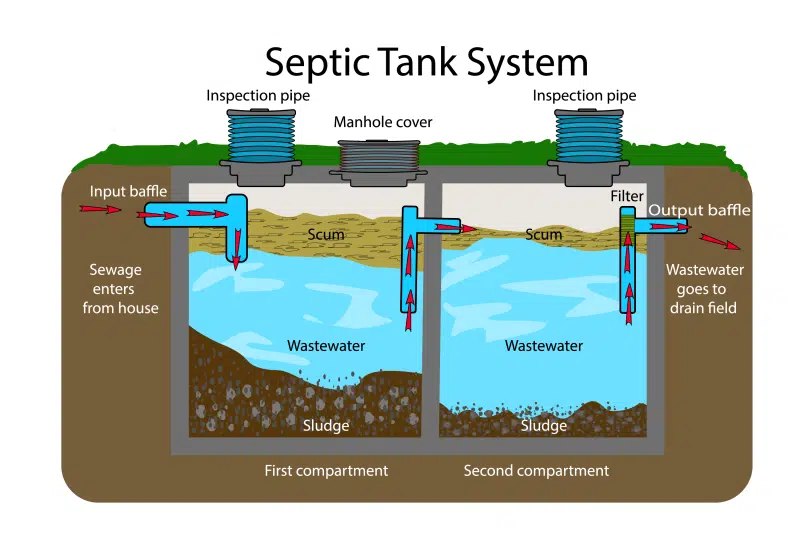
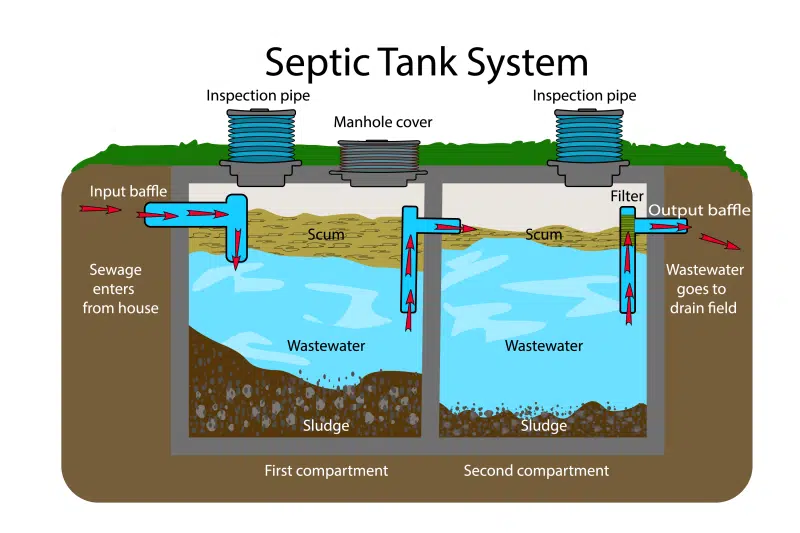
A functional septic system relies on five key components working together:
- Inlet Chamber: The inlet chamber is the first and largest section of the tank. Its primary purpose is to retain heavy solids—such as toilet paper, food waste, and feces—allowing them to settle at the bottom.
- Baffle Wall: This internal wall separates the inlet and outlet chambers. It features an opening at a specific middle depth, allowing only the clarified liquid—the layer between the floating scum and the sunken sludge—to pass through to the next chamber.
- Outlet Chamber: The second chamber provides additional time for any remaining fine solids to settle, further purifying the liquid before it exits the tank.
- Tank Outlet: The outlet is typically equipped with a vertical Tee-pipe. This design forces the exiting liquid to be drawn from below the floating scum layer. Because the top of the Tee sits above the water line, it prevents floating debris from entering the pipe and clogging the leach field.
- Leach field: The leach field consists of trenches roughly three feet deep, filled with a foot of gravel and a perforated pipe. As liquid flows from the tank, it spreads across the gravel and percolates into the soil. These trenches are covered with topsoil to prevent public exposure and ensure natural filtration.
These components ensure that wastewater is treated and safely reintroduced into the environment. If any single part fails, it can lead to significant system-wide issues.
How the SludgeHammer® System Helps
The SludgeHammer® transforms a passive, anaerobic septic tank into a high-performance, aerobic treatment plant. It aerates, circulates, and inoculates the entire tank using a fraction of energy—roughly the same amount required to power a single 50-watt lightbulb. Inside the unit, a sophisticated bioreactor environment is created.
In a standard installation, up to 33,000 gallons of water per day circulate through 120 square feet of an inner, compacted matrix core. This specialized surface area allows massive colonies of robust, waste-eating microbes to attach and thrive, providing a level of treatment that a stagnant tank simply cannot achieve.
To learn more, check out our video on how the SludgeHammer wastewater management system can help your rural property.
How Do You Maintain a Septic Tank?
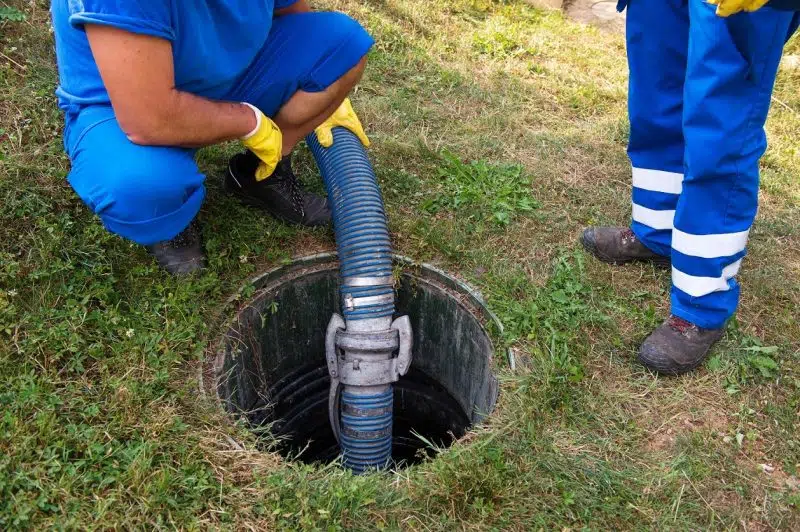
For standard septic tanks, the most critical maintenance task is professional pumping. A pump truck uses a high-powered vacuum and a 3-inch hose to remove both liquid and accumulated solids. It is recommended to pump your tank every 3 to 5 years, depending on household load. Waiting until the system fails is a dangerous game that often results in sewage backing up into the home.
Beyond pumping, maintenance is about what you do not put down the drain. “Flushable” wipes are notorious for clogging pipes. If it isn’t human waste or toilet paper, it does not belong in your septic system.
What Happens When a Septic System is Clogged?
The tank itself rarely clogs. Instead, failure typically occurs in the leach field trenches. Over time, the bottom of a trench may stop absorbing water, forcing liquid out the sides. Eventually, the liquid pools and fills the trench. When the liquid can no longer leave the tank, waste backs up into the house or spills onto the lawn—a foul, unsanitary situation.
Why Do Septic Systems Fail?
The primary cause of failure is biomat accumulation. In the human body, gut bacteria secrete mucus to protect themselves from stomach acids. In a septic tank, they produce even more to shield themselves from oxygen. This mucus becomes dissolved in the wastewater and flows into the leach field, creating a slimy, impermeable layer where the liquid meets the soil.
Other factors include:
- Neglected Pumping: When sludge and scum layers grow too thick, solids like toilet paper enter and clog the leach lines.
- Chemical Interference: Antibiotics, chemotherapy agents, excessive chlorine, or paint can kill the good bacteria in the tank, preventing proper waste separation.
Signs Your Septic System is Failing
Lush Green Grass: Unusually vibrant patches of grass over the leach trenches during dry weather.
- High Liquid Levels: Opening the tank to find the water level higher than the outlet pipe.
- Surface Seepage: Liquid or odors breaking through the soil in the yard.
- Backups: The final stage of failure, where plumbing backs up into the home.
What to Do if Your Septic System is Failing?
The first step is typically to pump the tank and, if necessary, jet the leach lines to clear sludge. To provide a long-term solution, the SludgeHammer® system can be introduced.
The SludgeHammer® ABG is installed in the first chamber and powered by a small, quiet 50-watt air blower. By introducing oxygen, the SludgeHammer Blend™ bacteria can flourish. These aerobic bacteria clean the liquid, eliminate odors, and travel into the leach field to consume the slimy biomat clogging the soil. While it cannot fix broken pipes, it can rejuvenate almost any field clogged by biomat.
What Makes SludgeHammer® Different?
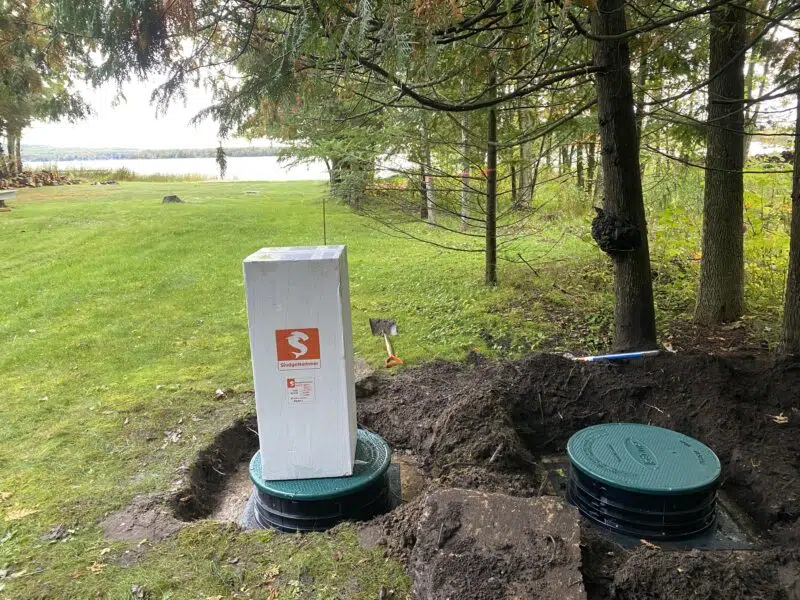
Historically, the only way to fix a failed leach field was through a costly, destructive excavation. SludgeHammer® uses biology to solve a biological problem.
- Non-Invasive: No heavy equipment is required, preserving your landscaping
- Odor Elimination: By aerating the tank, it is no longer septic (anaerobic), which removes the source of foul smells
- Water Recovery: The treated liquid is high enough quality to be used in sub-surface irrigation, effectively watering and fertilizing your landscape
The SludgeHammer® provides the oxygen and environment needed for bacteria to thrive, creating a steady supply of cleaners for your leach field.
Protecting Your Property and the Environment
Understanding how your septic tank works is the first step in avoiding costly repairs and environmental hazards. While traditional systems rely on a delicate balance of anaerobic bacteria and soil absorption, they are inherently prone to biomat clogging over time.
By shifting from a passive septic process to an active, aerated treatment solution like SludgeHammer®, you can extend the life of your leach field, eliminate foul odors, and ensure your household wastewater is processed safely and efficiently. Proper maintenance today prevents the unpleasant surprises of tomorrow.
Interested in becoming a SludgeHammer® installer? Visit our Become and Installer page for details!

Frequently Asked Questions
Can I plant trees or shrubs near my leach field?
It is best to avoid planting trees or large shrubs within 30 feet of your leach field. Aggressive root systems are naturally drawn to the moisture and nutrients in the trenches, which can lead to cracked pipes and structural blockages. Stick to shallow-rooted grasses or flowers to keep the area stable without risking damage.
Does using a garbage disposal affect my septic system?
Yes. A garbage disposal significantly increases the amount of organic solids and grease entering the inlet chamber. This leads to faster sludge accumulation, meaning you will likely need to pump your tank more frequently (every 1–2 years instead of every 3–5) to prevent these solids from reaching the leach field.
Is it safe to use “septic-safe” household cleaners?
Most standard household cleaners are safe in moderation, but antibacterial products and heavy bleach should be used sparingly. These are designed to kill bacteria, and if they enter the tank in high concentrations, they can wipe out the microbial colonies responsible for breaking down waste, leading to system stagnation.
How does heavy rain or flooding impact my septic tank?
During periods of extreme rain, the soil in the leach field can become saturated, leaving no room for wastewater to percolate. This can cause the system to back up temporarily. It is important to divert North-facing gutters and surface runoff away from the leach field area to prevent hydraulic overloading.
Can I build a deck or parking pad over my septic tank?
You should never build permanent structures or drive heavy vehicles over any part of the septic system. Doing so can crush the pipes, collapse the tank, or compact the soil in the leach field, which destroys its ability to absorb water. Access manholes must always remain clear for inspection and pumping.